
School Days at the Farm
On October 17, 2023, KES third grade students, teachers and staff members took part in a history learning experience at Parmelee Farm. They were transported back in time to learn about and experience life in the 1840’s in Killingworth by Historical Society members.
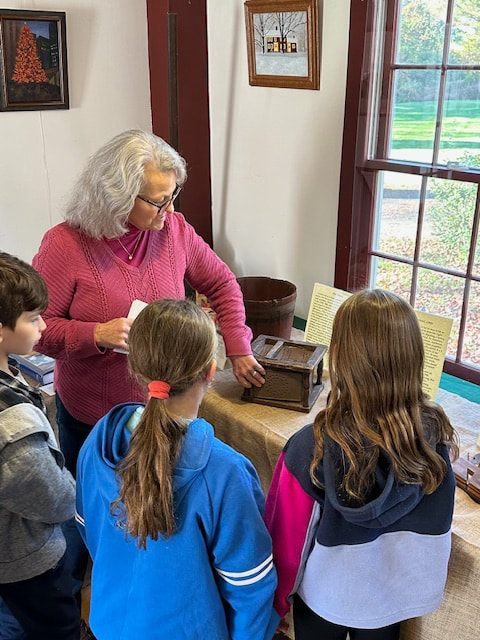
Students took turns churning butter in the Parmelee Farmhouse and learned about life on the farm. They learned about chores and had fun with a scavenger hunt identifying everyday household items from long ago.
Inside the KHS barn, History Instructor David LeVasseur spoke about the first settlers and Indigenous People who lived in this area and walked the woods and trails here. They were led in an informative game of identifying farm tools and implements once used on Killingworth farms.
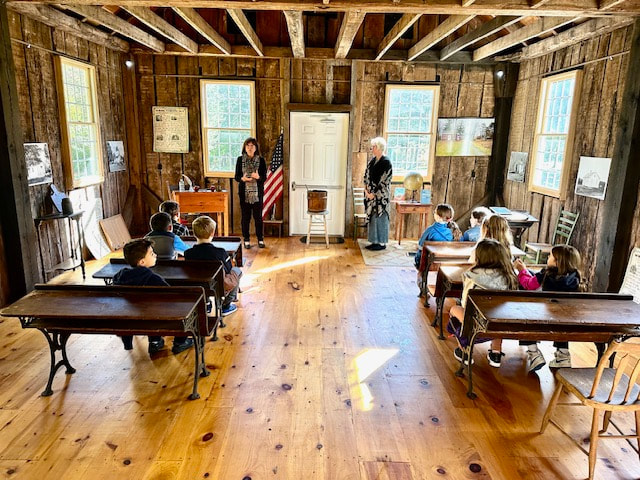
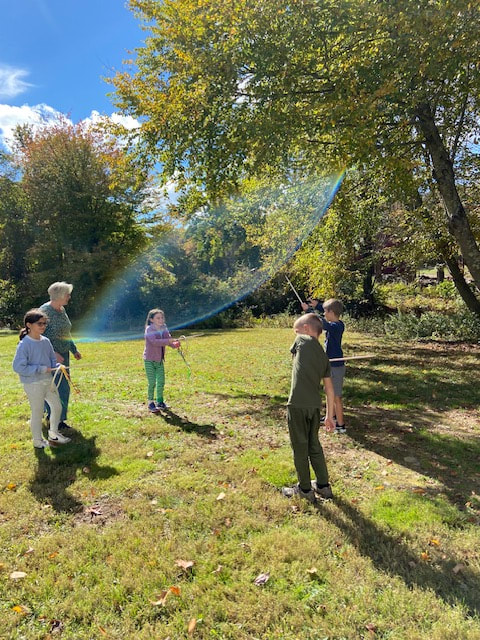
The doors to the Pine Orchard Schoolhouse opened to let the children experience lessons learned attending a one-room schoolhouse. Students were immersed in Reading, Writing and Arithmetic using books from the 1800’s. They played games with authentic whirligigs, hoops and sticks and Games of Graces. It was an educational and fun day for all.
Students took turns churning butter in the Parmelee Farmhouse and learned about life on the farm. They learned about chores and had fun with a scavenger hunt identifying everyday household items from long ago.
Inside the KHS barn, History Instructor David LeVasseur spoke about the first settlers and Indigenous People who lived in this area and walked the woods and trails here. They were led in an informative game of identifying farm tools and implements once used on Killingworth farms.
The doors to the Pine Orchard Schoolhouse opened to let the children experience lessons learned attending a one-room schoolhouse. Students were immersed in Reading, Writing and Arithmetic using books from the 1800’s. They played games with authentic whirligigs, hoops and sticks and Games of Graces. It was an educational and fun day for all.

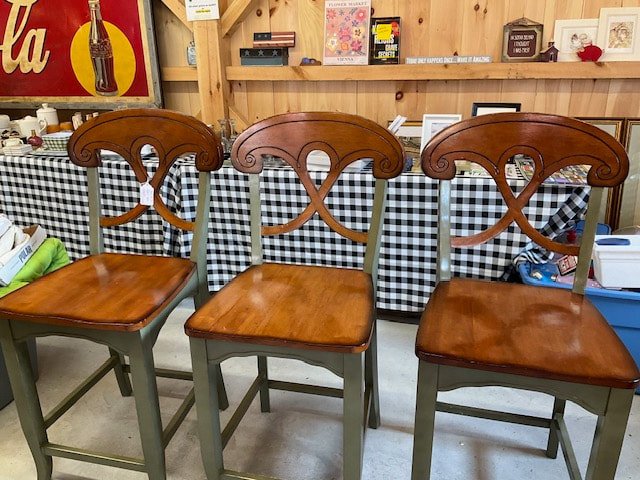
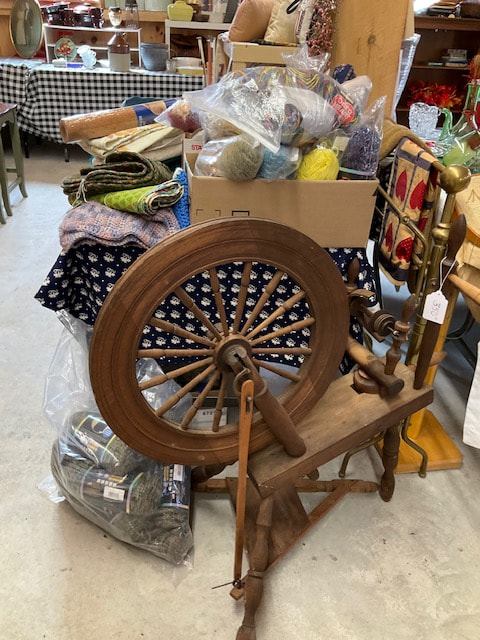
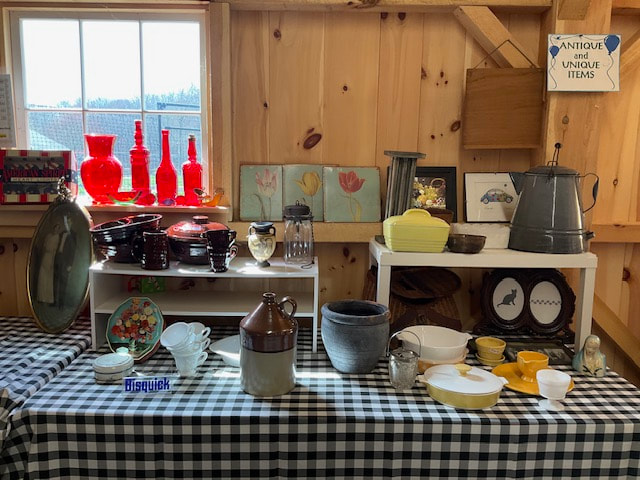
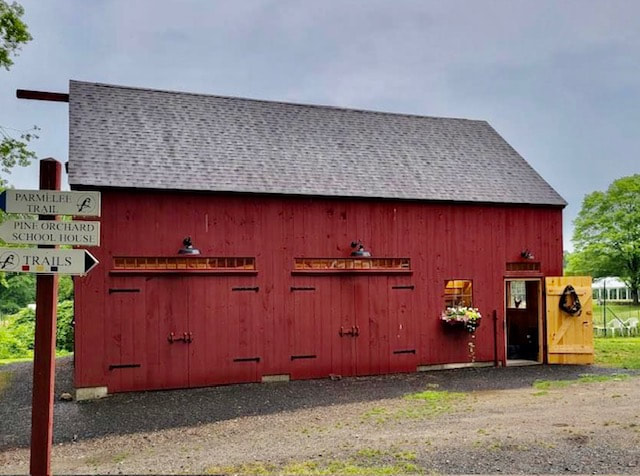
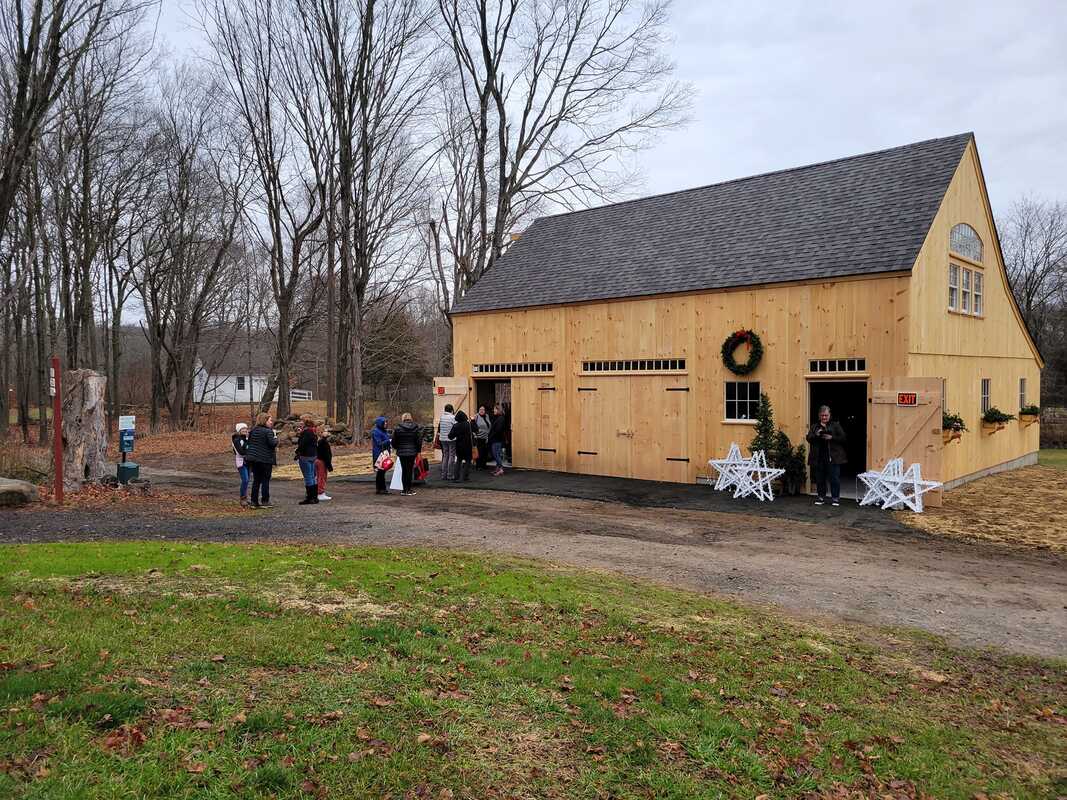
New Barn Provides Much Needed SpaceThe Historical Society barn, located behind the farmhouse, is a welcome addition to the Parmelee Farm. It took many years of fundraising to secure the monies to build the barn, but it was worth the wait. The post and beam structure is appropriate to the farm and has allowed the Society much needed space for its growing collection of artifacts. Additionally, the barn is used for events like school programs and the Annual Christmas Fair.
|
|


Clara E. Parmelee
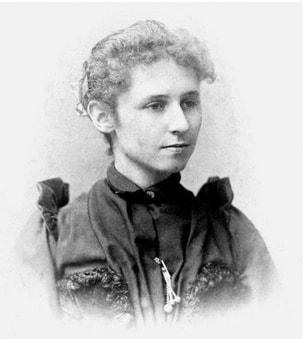 Clara E. Parmelee (1869–1948), organist for 44 years.
©Thomas L. Lentz, Municipal Historian
Clara Parmelee (1869–1948) was the organist from 1904 and Clerk of the church from 1916. She was the daughter of Leverett Parmelee and Florinda Barnum Parmelee. She was born in and lived frugally her entire life in her home “Four Firs” across the road and a little north of the church. She taught for a few years at the Chestnut Hill School. She was an essential part of the church and the community playing the organ for nearly 45 years for morning and evening services, Christmas carol services, weddings, baptisms, and funerals. She played the organ the Sunday before she died. She was the “mother” of the church and was loved by all.
In 1944, the Rev. Coburn paid tribute to Miss Parmelee’s service.
Congratulations are especially to be extended to Miss Clara E. Parmelee for her years of faithful service as organist. The general feeling on the part of all our people found expression in a Sunday of celebration for her on Aug 6th in honor of her forty years of service as organist of the church. In addition to the morning service in her honor a special fellowship dinner was given at the town hall and a purse of $200.00 was presented to her. It was a very happy & felicitous occasion. Rev. Woolsey Couch, a former minister of the church, made the presentation. Nearly a hundred of Miss Parmelee’s friends attended.
The church was filled to capacity at her funeral conducted by the Rev. Luther Coburn and the Rev. Milton Liebe. There was a profusion of flowers and bouquets at the service. Mrs. George Dreyman who had assisted her as organist softly played the organ. Mrs. Evan Wilkinson sang “In the Garden” and Mrs. Edward Fisher sang “One Sweetly Solemn Thought.” Burial was in the family plot in the Evergreen Cemetery.
Clara Parmelee (1869–1948) was the organist from 1904 and Clerk of the church from 1916. She was the daughter of Leverett Parmelee and Florinda Barnum Parmelee. She was born in and lived frugally her entire life in her home “Four Firs” across the road and a little north of the church. She taught for a few years at the Chestnut Hill School. She was an essential part of the church and the community playing the organ for nearly 45 years for morning and evening services, Christmas carol services, weddings, baptisms, and funerals. She played the organ the Sunday before she died. She was the “mother” of the church and was loved by all.
In 1944, the Rev. Coburn paid tribute to Miss Parmelee’s service.
Congratulations are especially to be extended to Miss Clara E. Parmelee for her years of faithful service as organist. The general feeling on the part of all our people found expression in a Sunday of celebration for her on Aug 6th in honor of her forty years of service as organist of the church. In addition to the morning service in her honor a special fellowship dinner was given at the town hall and a purse of $200.00 was presented to her. It was a very happy & felicitous occasion. Rev. Woolsey Couch, a former minister of the church, made the presentation. Nearly a hundred of Miss Parmelee’s friends attended.
The church was filled to capacity at her funeral conducted by the Rev. Luther Coburn and the Rev. Milton Liebe. There was a profusion of flowers and bouquets at the service. Mrs. George Dreyman who had assisted her as organist softly played the organ. Mrs. Evan Wilkinson sang “In the Garden” and Mrs. Edward Fisher sang “One Sweetly Solemn Thought.” Burial was in the family plot in the Evergreen Cemetery.